
Guest Post By Stephen Morse
Executive Summary
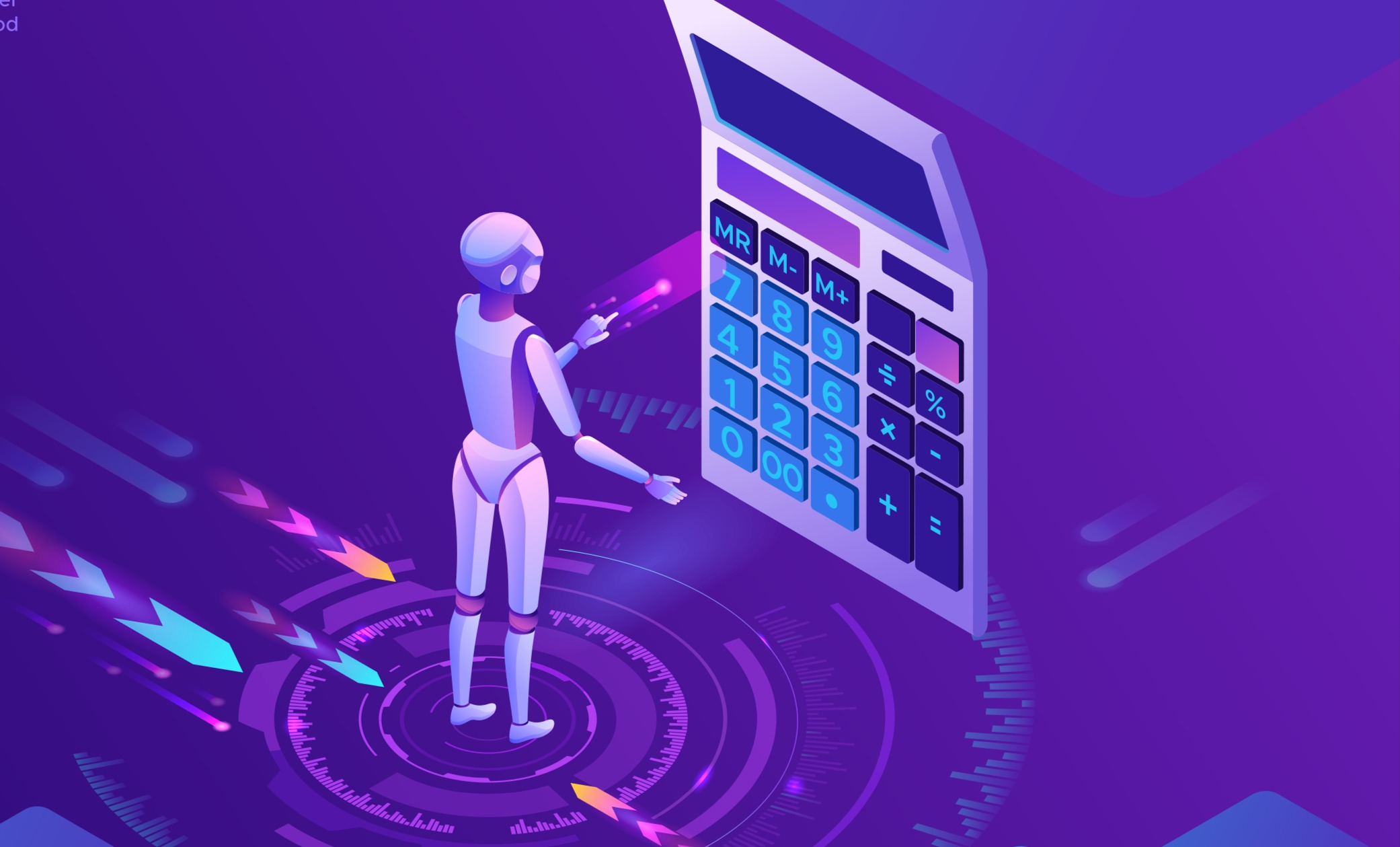
The story of the calculator teaches us a lot about AI and what it is doing today. It shows how a tool can begin as controversial, become widely adopted, and ultimately reshape global behaviors. AI is following a similar path, but on a more foundational cognitive scale, extending not just computation, but parts of reasoning, synthesis, and communication for Sales Engineers. This blog explores how Sales Engineers who learn to lean in and leverageAI without losing the conceptual knowledge and core fundamentals underneath the work, will be the ones who accelerate faster as the role evolves.
Sales Engineers Understand Leverage
At our best, we take complexity and turn it into clarity. We absorb technical detail, connect it to business value, and help customers make confident decisions. It is a role built on learning quickly, communicating clearly, and thinking across both depth and breadth. That is exactly why AI matters so much to the SE profession.
To understand where AI is going, it helps to look backward. The calculator offers a surprisingly useful model.
When a Powerful Tool Enters a Profession
When calculators first appeared, they were novel, expensive, and often rejected. In classrooms especially, many people saw them as a threat to real learning. The argument was simple: if students used calculators, they would stop understanding the fundamentals. Doing the work by hand was seen as the only legitimate path to mastery.
We hear echoes of that argument today with AI.
Some professionals still view AI as a shortcut that weakens thinking. They worry that using it will reduce originality, erode skill, or create dependency. Those concerns are worth taking seriously. But they are also incomplete, because they miss what usually happens when a powerful tool enters a profession. The people who use it effectively are not automatically made weaker. They are often made more capable.
That is what happened with calculators. People who adopted them could move faster and handle more complexity. They didn’t have to spend as much time on low value repetitive work, so they could spend more time on interpretation, judgment, and application. Eventually calculators became normal, not because fundamentals stopped mattering, but because the tool made competent people more productive.
That same dynamic is now playing out in Sales Engineering.
Same Dynamic, Different Time
AI can help an SE prepare for discovery by generating sharper questions and surfacing likely customer pain points. It can summarize meeting notes, organize follow up actions, compare competitors, refine messaging, and turn rough ideas into usable first drafts. It can help identify gaps in a demo story, strengthen an executive presentation, and accelerate internal communication. For frontline SE leaders, it can also support coaching, planning, content creation, onboarding, and scale.
In short, AI reduces friction across the work that surrounds our expertise.
Not Just About Technical Knowledge
That is important because Sales Engineering has never just been about technical knowledge. It is about time allocation. The best SEs know that their highest value comes from insight, trust, adaptability, and problem solving in front of customers and internal stakeholders. Anything that helps reclaim time from repetitive mental labor gives us more room to operate in those higher value areas.
At the same time, the calculator metaphor gives us an important warning. The tool is useful, but it is not the craft.
Disciplined Integration
An SE still needs fundamentals. You still need to know how to run discovery. You still need to understand architecture, business drivers, objection handling, storytelling, and executive presence. You still need critical thinking. AI can help draft a better answer, but it cannot own the customer relationship. It can summarize a meeting, but it cannot fully understand the political nuance in the room unless you do. It can generate options, but it cannot replace your judgment about which option fits the moment.
That is why the best approach is not blind adoption or blanket resistance. It is disciplined integration.
Treat AI as a powerful new member of the team. Let it do what it does well: accelerate, organize, synthesize, and broaden. But keep ownership of what only you can do: discern, connect, persuade, and build trust. The strongest SEs and SE leaders will be the ones who combine deep fundamentals with smart AI leverage.
AI: The New Baseline
There is also a career lesson here. In every era, the professionals who learn new tools early tend to pull ahead. They build fluency while others debate. They discover the use cases, the limitations, and the real workflows before the rest of the market catches up. Over time, what was once an advantage becomes the new baseline.
I believe AI is on that same path. Soon it will be woven into the daily operating rhythm of Sales Engineering, just as calculators became woven into education, finance, and business. The question is not whether AI will become common. It is whether we will learn to use it while early adoption still creates separation.
Conclusion
The calculator did not replace mathematical understanding. It raised expectations for what people could do with that understanding.
AI will do the same for Sales Engineering.
About the Author
Stephen Morse is the Founder and CEO of The SE Leadership Institute (SELI) and author of the upcoming book “Sales Engineering Leadership.”
SELI is an organization dedicated to amplifying the best practices and brand of Sales Engineering through enablement, coaching, advisory, and thought leadership. To learn how Sales Engineers and SE leaders can grow their impact in a changing profession, visit seleadership.com for resources and information on the upcoming book.